Energy is a key factor in combating climate change, one of the biggest challenges the world is facing today. India has committed to cutting emissions to net zero by 2070 and set ambitious targets for adopting renewable energy. Achieving these targets requires careful planning and an overhaul of our current energy system.
Our work aims at enabling policies that encourage the adoption of rooftop solar, facilitate the development of technology for energy storage, strengthen the grid and transmission infrastructure, advance hydrogen technologies, and promote green mobility. CSTEP's research looks at the various aspects of mainstreaming renewable energy for a cleaner, greener energy sector.



Addressing the challenges of RE Manufacturing in India: Horizon 2032
The Government of India, through its Jawaharlal Nehru National Solar Mission (JNNSM), Modified Special Incentive Package Scheme (MSIPS), National Manufacturing Policy (NMP) and Make in India, has announced several measures and incentives favouring renewable manufacturers. The National Wind Mission and the Renewable Energy Law also include a variety of measures that would benefit domestic manufacturers. This report comprehensively examines the manufacturing supply chain of different components used in Renewable Energy (RE) systems, especially wind and solar technology, in India.
Analytical derivation of explicit J-V model of a solar cell from physics based implicit model
This article appeared in a journal published by Elsevier.
Analytical derivation of equivalent functional form of explicit J–V model of an illuminated solar cell from physics based implicit model
Recently a simple explicit model was introduced to represent theJ–Vcharacteristics of an illuminated solar cell with parasitic resistances and bias dependent photocurrent asj=(1−vm)/(1+αv), here the normalized voltage,vand normalized current densityjcan be represented asv=V/V
An empirical model of power curve of a wind turbine
The power curve of a wind turbine grows exponentially as a function of wind-velocity if the measured wind-velocity varies between the cut-in velocity and the rated velocity. In this study, we propose an empirical, two-parameter explicit model of the power curve for a wind turbine. The model generalizes different turbine power curves and provides an easy estimate to compare various turbine characteristics.
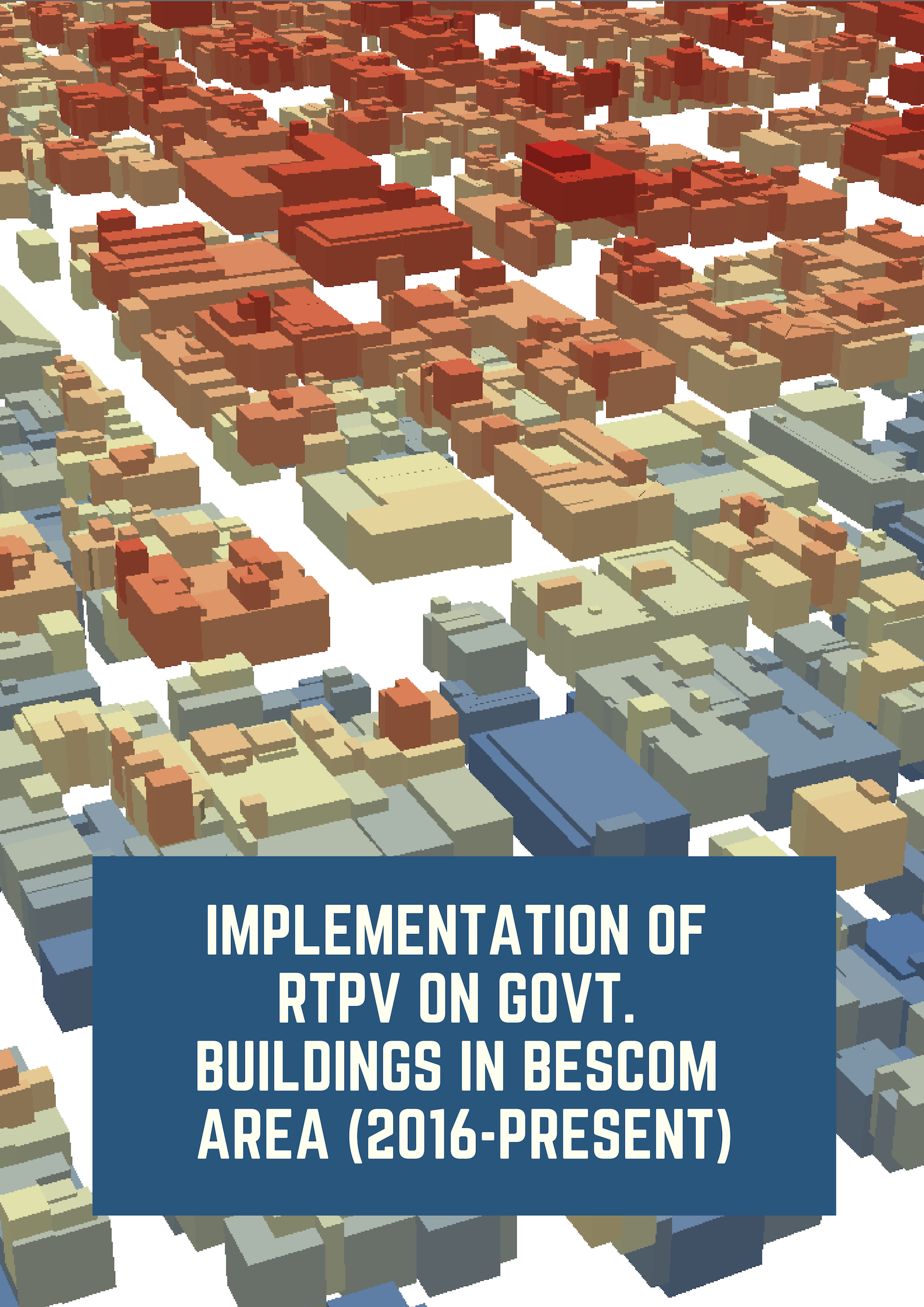
Comparative Techno-Economic Analysis of Rooftop PV (RTPV) Systems in Various States in India
The growth of RTPV has been sluggish compared to ground-mounted installations. This study analyses the techno-economics of RTPV in different states with their respective net-metering (NM)/gross-metering (GM) regulations and state policies to assess the financial performance of RTPV systems. States having abundant amount of solar potential such as Karnataka, Gujarat, Rajasthan, Maharashtra and Tamil Nadu are considered. The results of this analysis show that there is a lack of favourable consumer-end economics indicated by equity Internal Rate of Return (IRR) and payback period findings.
Mean Line Design of Radial Inflow Turbine for sCO2 Power System
Closed Loop Brayton cycle power plants using supercritical carbon dioxide (sCO2) have drawn the attention of many researchers in recent times. In this power plant (using heat source from either solar or nuclear),one of the main challenges is the design of the prime mover, namely the turbine. Radial Inflow Turbine (RIT) is found to be a suitable candidate as it has many advantages over Axial Flow TurbinesTechnologies used for the design of RIT for air Brayton cycle are well established.
Machine Level Energy Efficiency Analysis in Discrete Manufacturing for a Sustainable Energy Infrastructure
Sustainable economic development necessitates a careful design of the energy infrastructure.
Global mechanisms to create energy efficient and low-carbon infrastructures: An Indian Perspective
Global mechanisms to create energy efficient and low-carbon infrastructures: An Indian Perspective
A power game: simulating the long-term development of an electricity market in a competitive game
A power game: simulating the long-term development of an electricity market in a competitive game